Other than the beautiful beaches in Bohol and rich nature, there is also where you felt like stepping into a living ecosystem designed with intention, resilience, and quiet excellence.
For an entrance fee of ₱80, I joined Bohol Bee Farm’s guided tour, not expecting how layered and immersive the experience would be.
This was not just about seeing processes. It was about understanding its history.

History of Bohol Bee Farm
Bohol Bee Farm stands as a sustainable living and farm-to-table dining destination which exists on the Panglao Island cliffs.
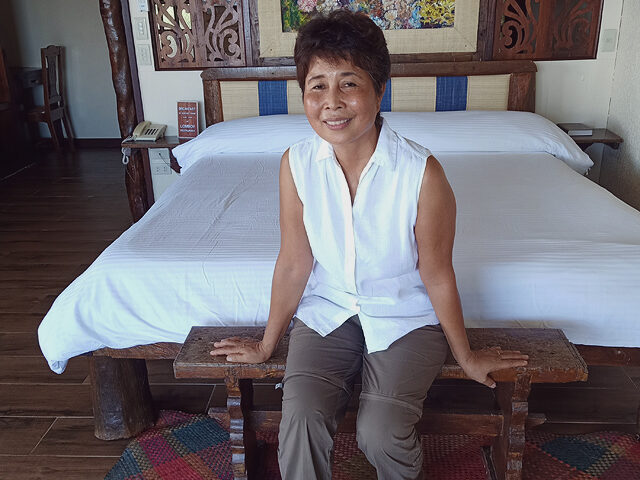
The eco-friendly sanctuary which Vicky Wallace established and began as a small operation with 6 colonies in 1988 to help local communities through organic farming has become a required stop for travelers who wish to experience nature.
The farm provides a genuine experience of Boholano hospitality through its various offerings especiallly ice cream flavors ‘Buzzz’ that feature Malunggay and Spicy Ginger.
- Dao, Panglao Island, Bohol (about 15-20 minutes from Alona Beach).
- 7:00 AM – 09:00 PM daily
- Guided tours: Typically run every 30 minutes from 8:00 AM to 4:30 PM.
Let me walk you through my experience as I join Bohol Bee Farm’s guided tour.
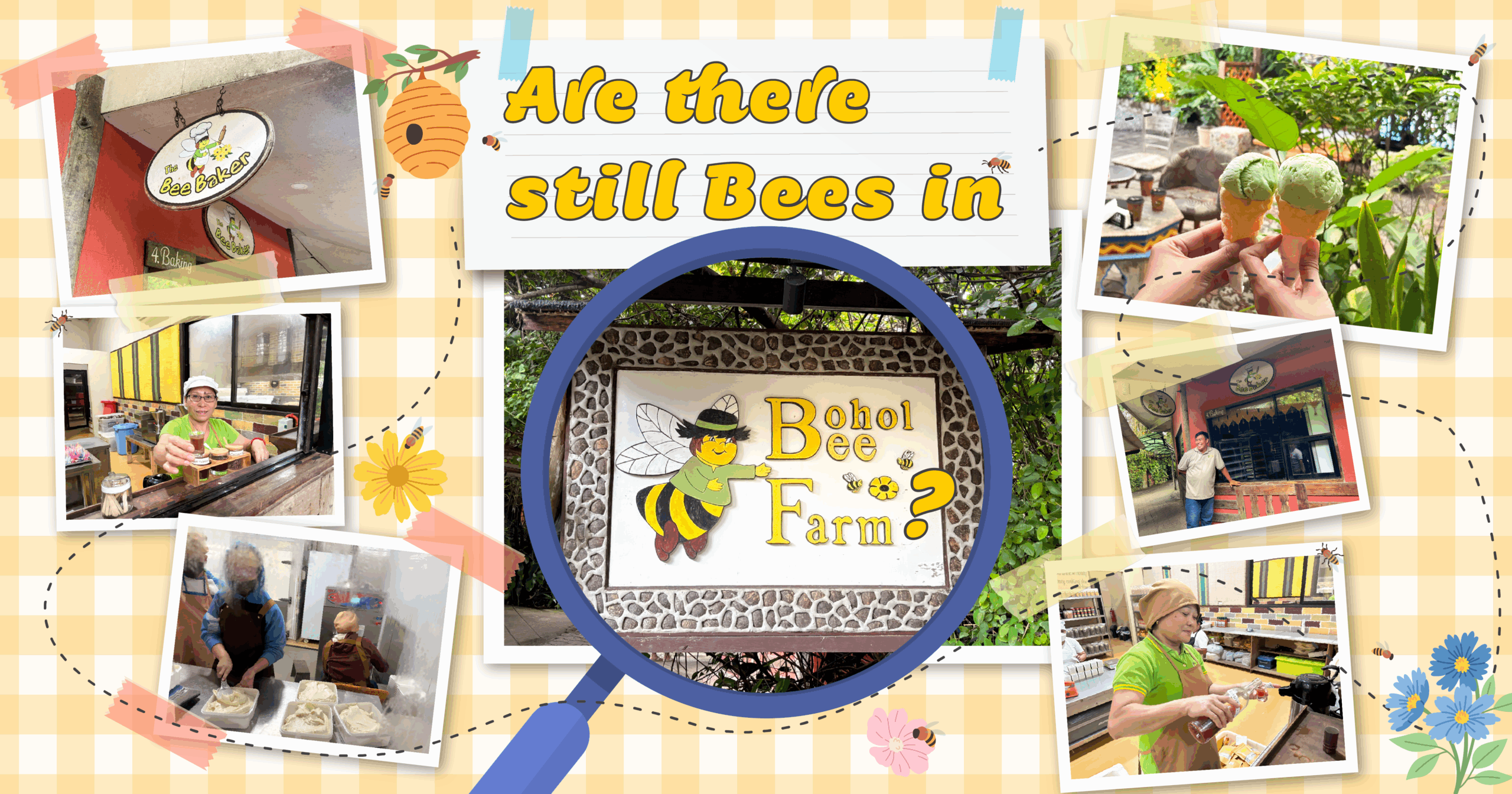
Ice Cream Production Area
Our first stop was the ice cream production area, where Bohol Bee Farm’s commitment to natural ingredients became more.
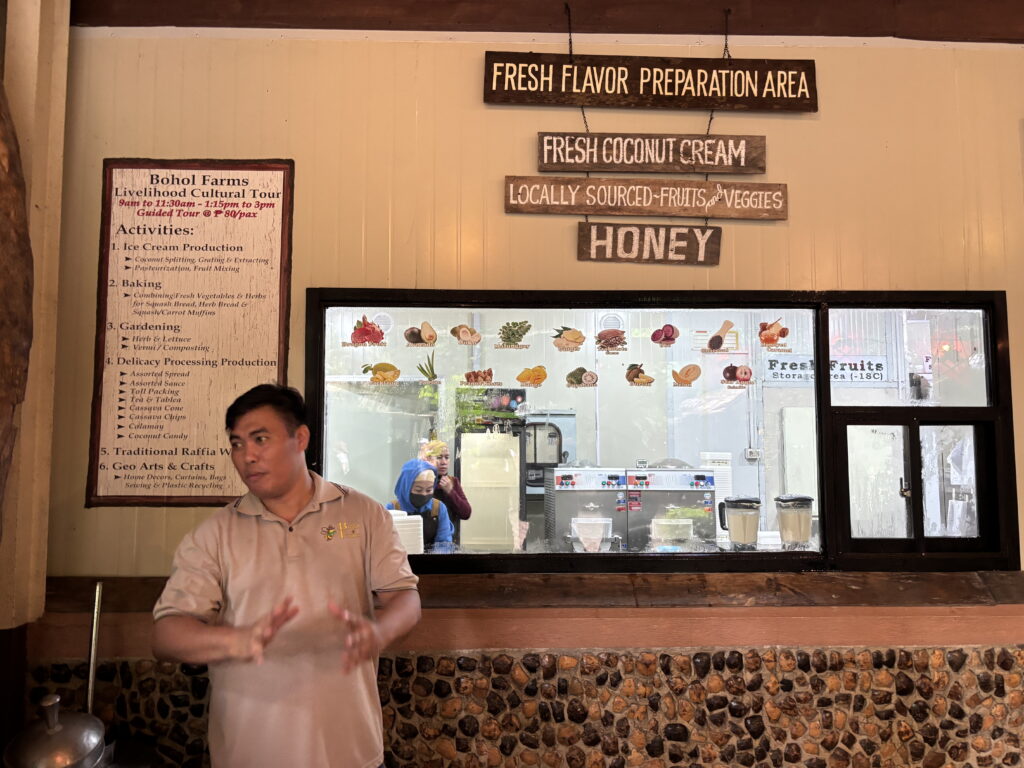

Sir Arnold has proudly dedicated 10 years of service to Bohol Bee Farm!
Unlike commercial ice cream, their base starts with coconut milk, giving each scoop a clean, rich, and dairy-free foundation.
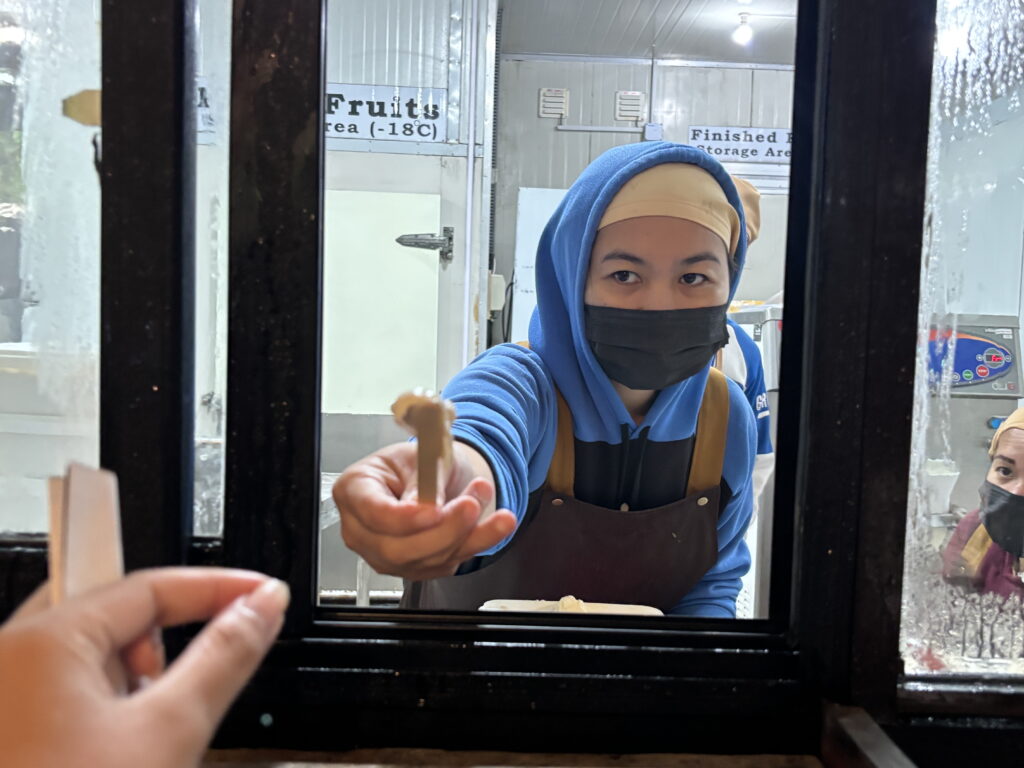
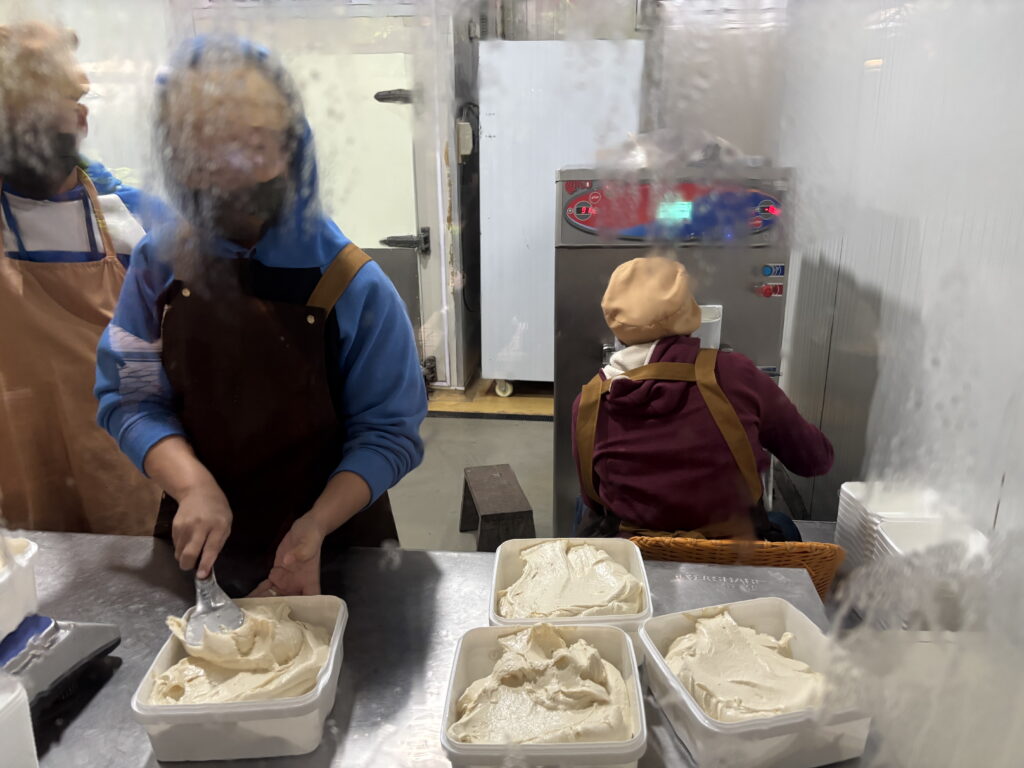
They operate three ice cream machines, each carefully calibrated to maintain quality rather than speed.
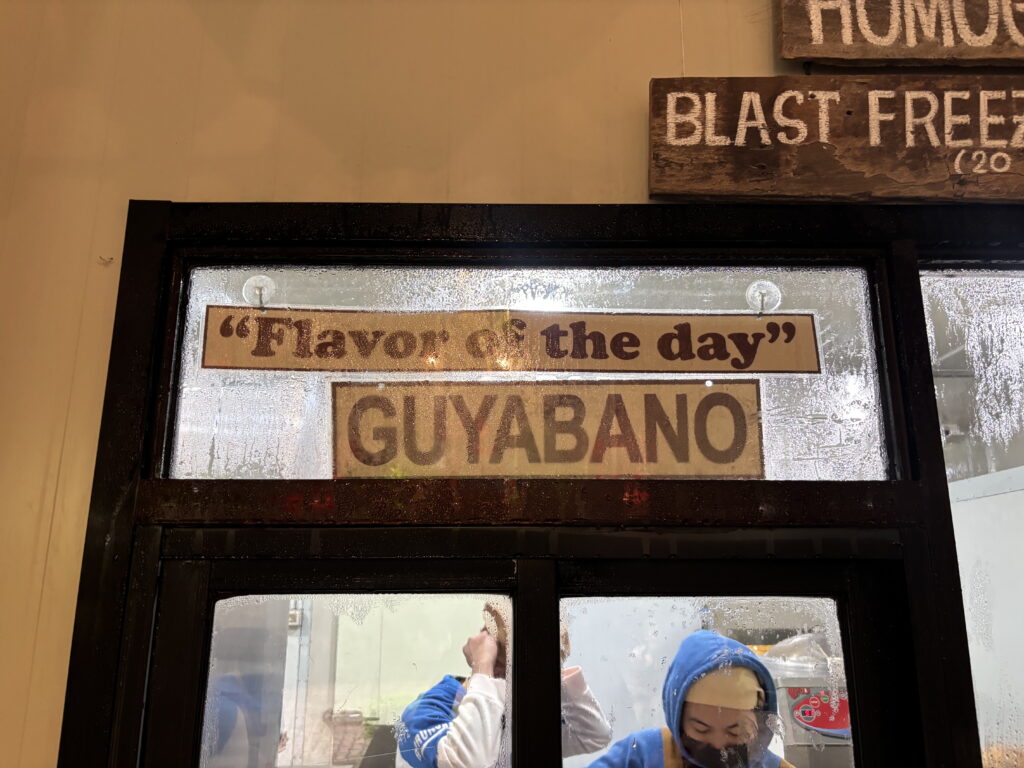
Their best flavor was Malunggay ice cream, but unfortunately it was not available during our visit so we tried their “Flavor of the Day” which was Guyabano. It was light, refreshing, and naturally sweet like a vanilla.
The Bee Bake
Next, we moved to The Bee Bake, their bread production area. Here, squash or pumpkin takes center stage, infused directly into the dough.
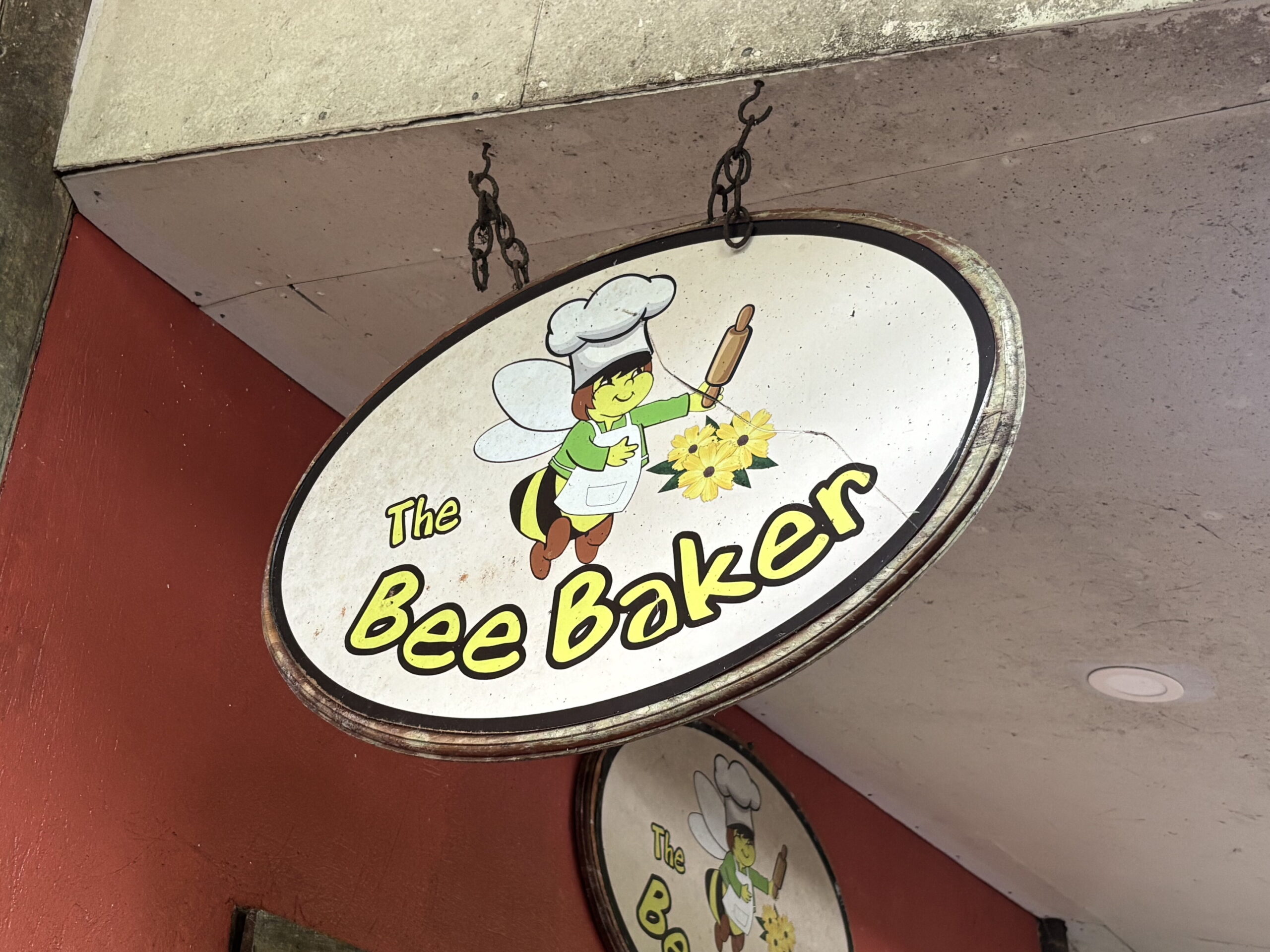
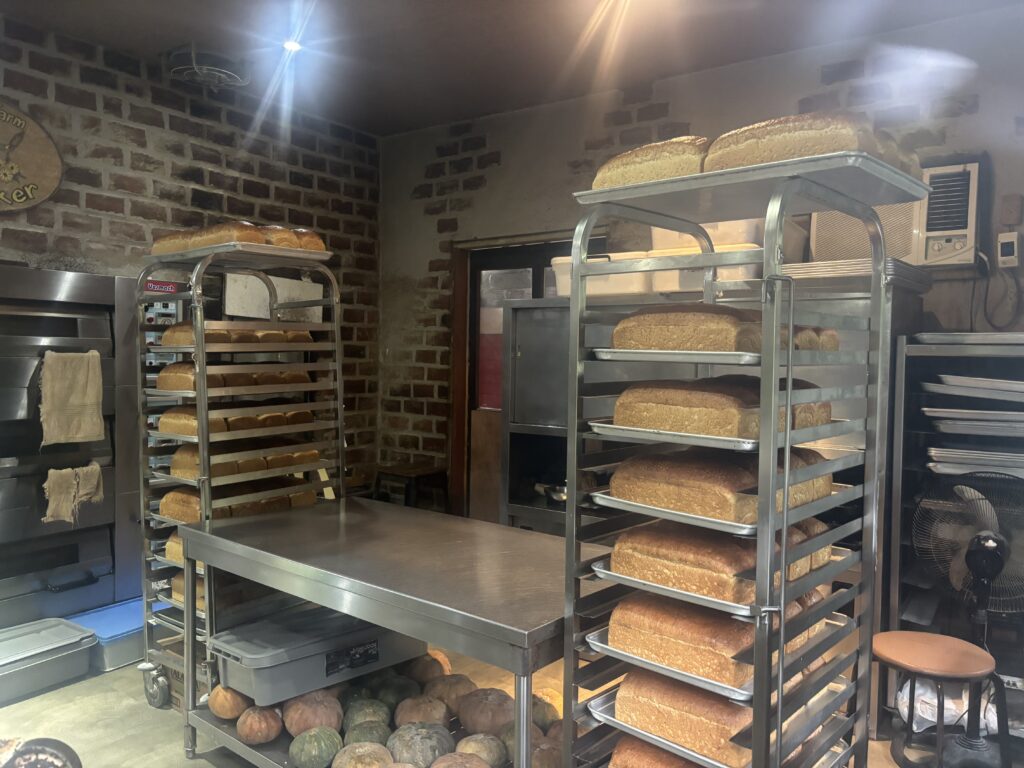
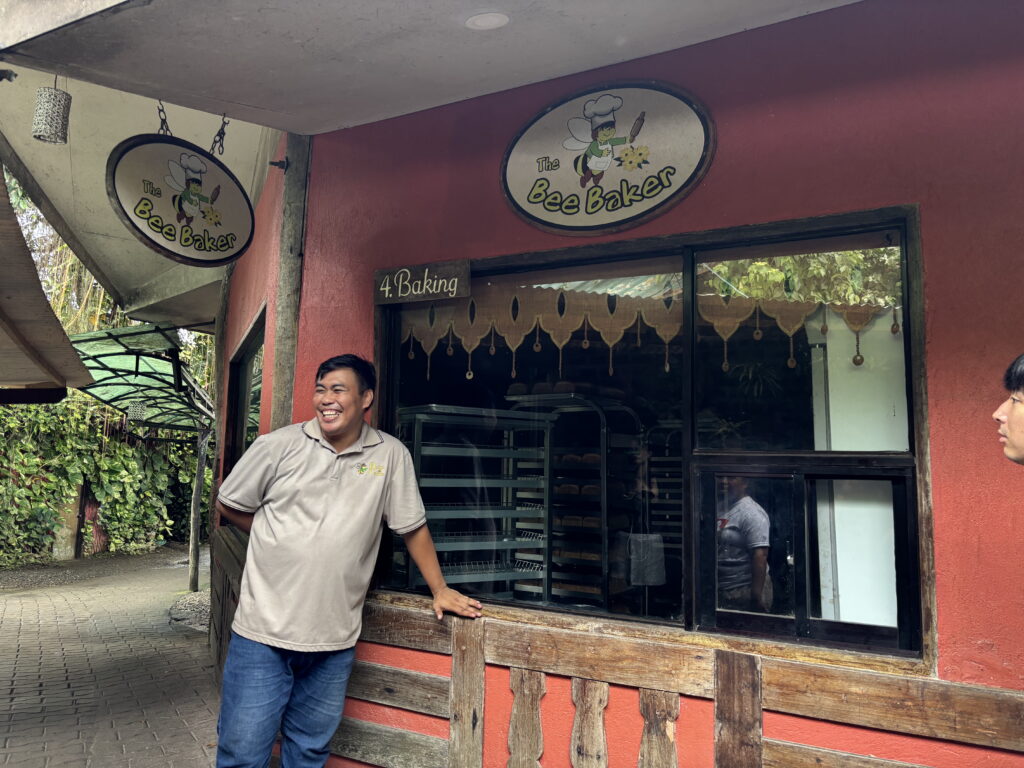
The result is a soft, subtly sweet bread that feels both nourishing and indulgent.
What makes it remarkable is its shelf life. The bread lasts only three days.
No preservatives. No shortcuts. Just purely fresh baking!
That limitation is intentional. It reinforces their philosophy that food should be fresh, seasonal, and respected.
Nothing here is designed for mass storage. Everything is made to be consumed mindfully.
From Bees to Gardens
One of the most powerful parts of the tour was learning how Bohol Bee Farm adapted after Typhoon Odette.
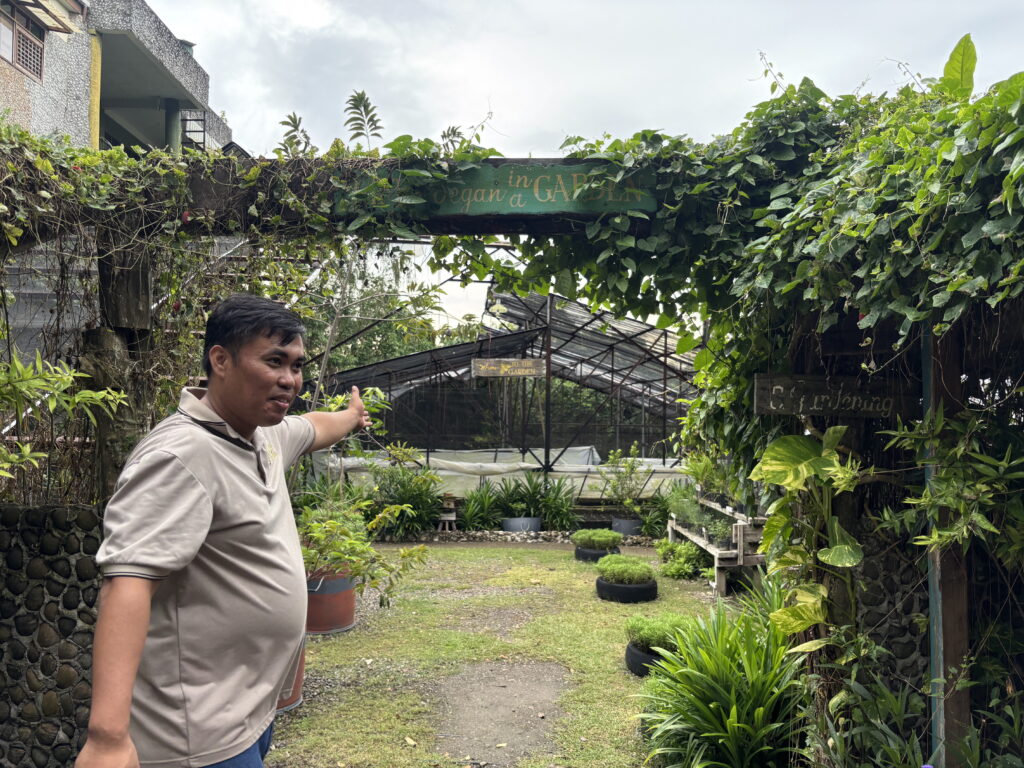
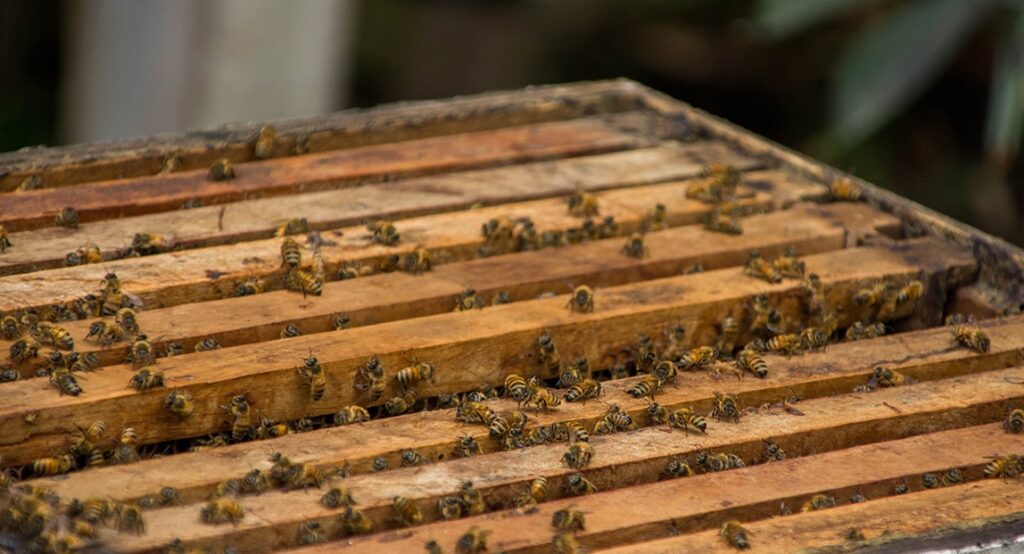
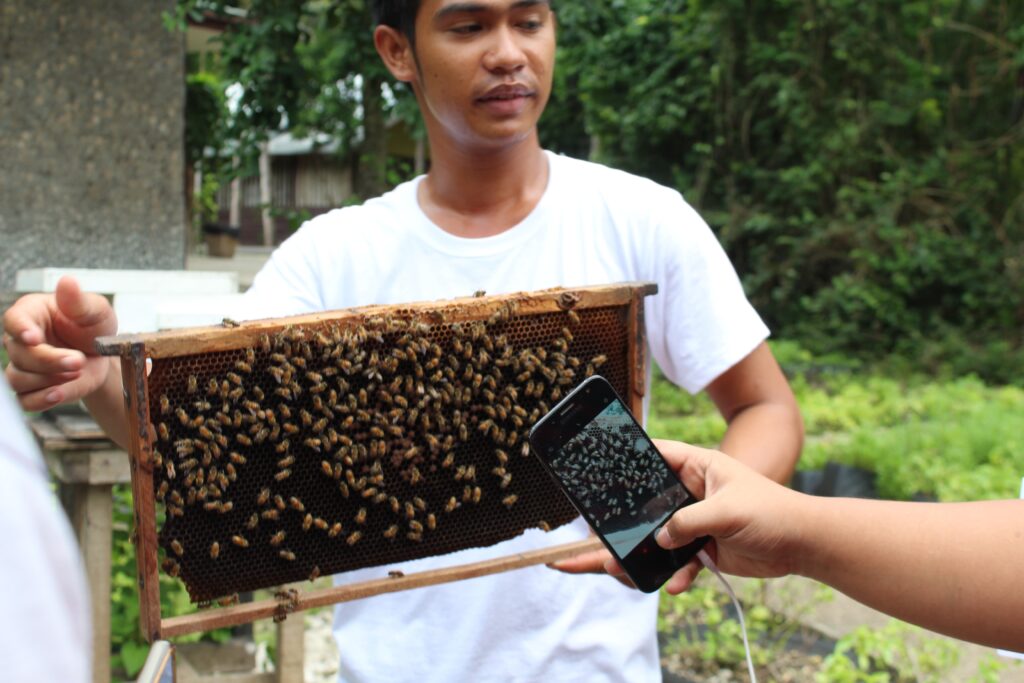
Since the typhoon, they have stopped pulling bee hives entirely. Over time, the bees gradually disappeared from the area.
Instead of forcing recovery or rebuilding artificially, they pivoted. Gardening became their new focus.
The land evolved from bee-centric production into a diversified agricultural space, growing herbs, vegetables, and raw materials that now support their food and retail products.
Even their infrastructure tells a sustainability story.
Built using bagol and bao since 2016, the structures were designed for recycling and durability.
These natural materials proved their strength during extreme weather, validating the farm’s long-term thinking and eco-conscious design.
Delicacy Production
As we move on to the next stop, this area felt like the heart of the farm. It is where their spreads are made, including malunggay pesto, mango, honey, and chocolate spreads.
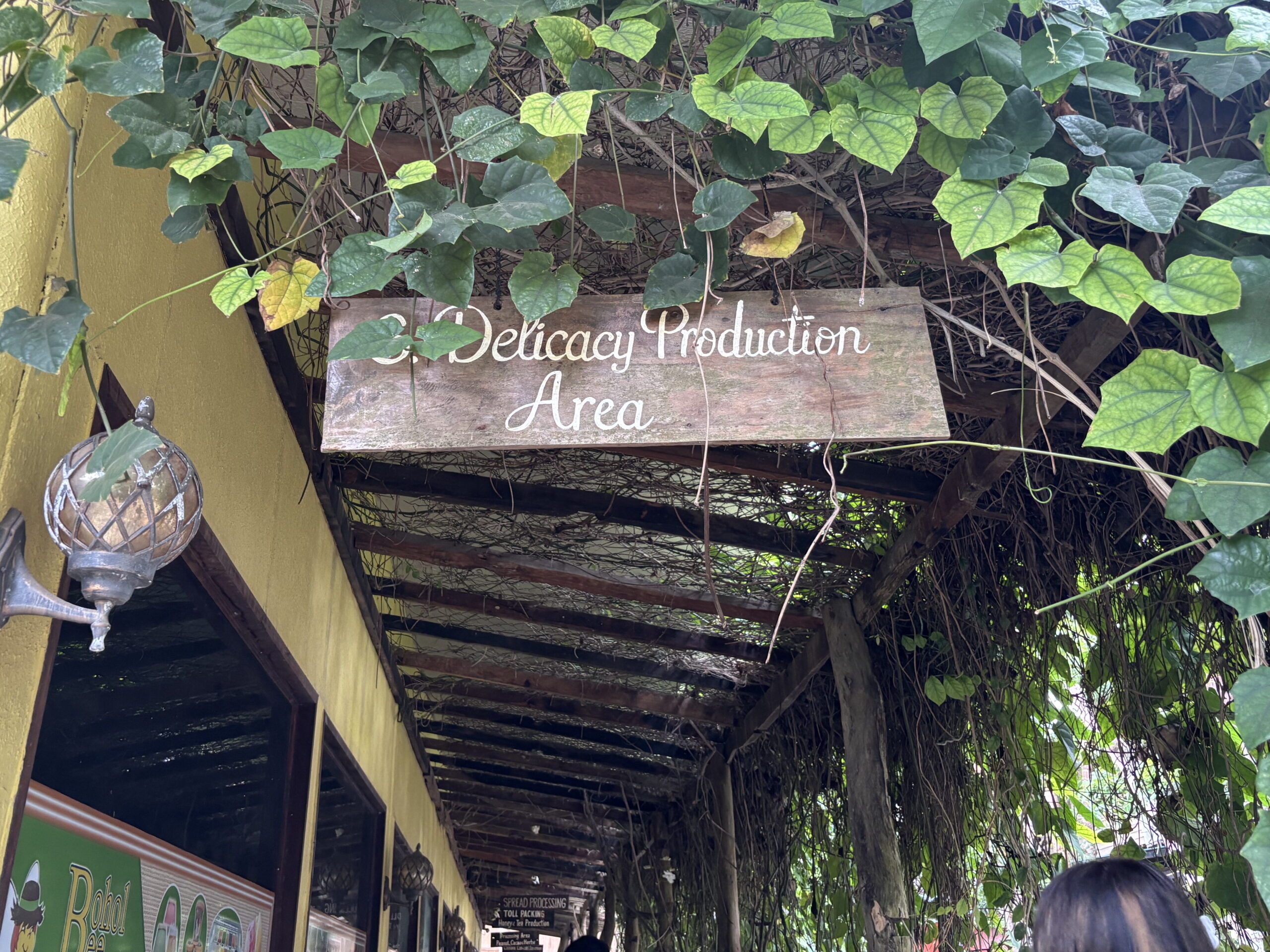
Each product reflects the same principle. Simple ingredients, clear sourcing, and no unnecessary additives.
We were given squash bread to taste the spreads, a thoughtful pairing that allowed each flavor to stand out.
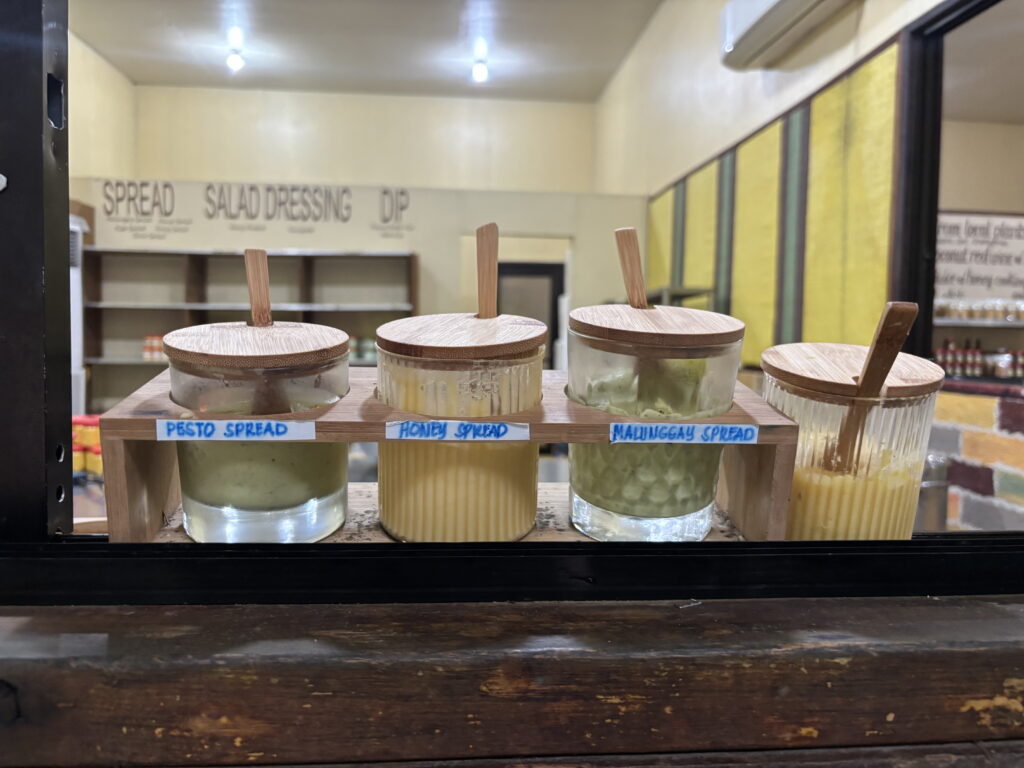
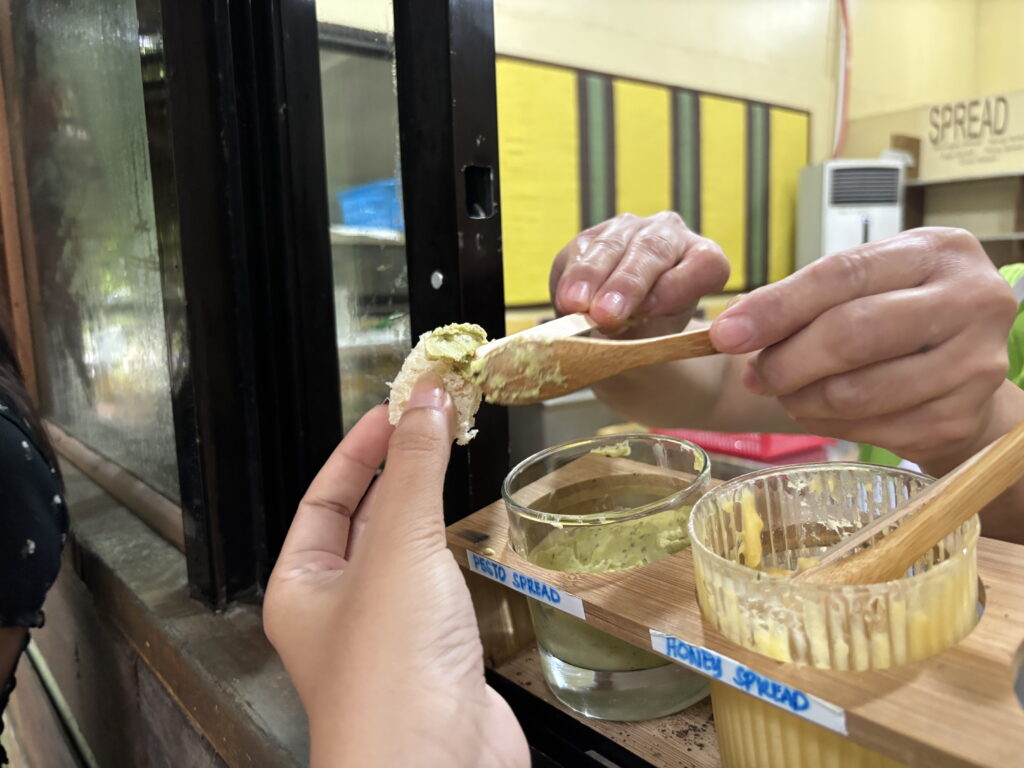
The malunggay pesto was robust and herbaceous. The mango spread balanced sweetness with acidity. The honey was clean and floral.
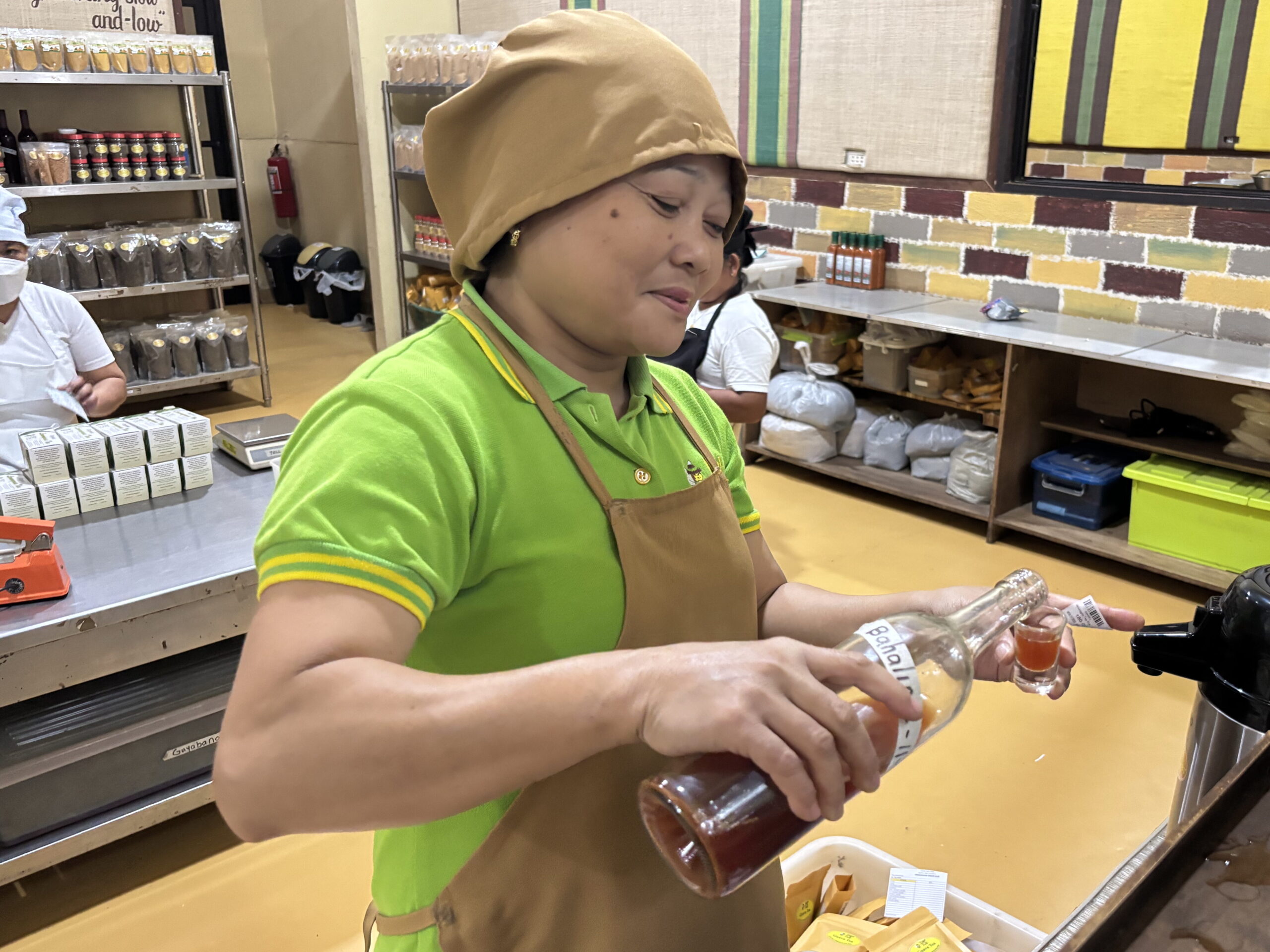
One highlight was the ginger tea shot with honey. Sharp, warming, and energizing, it felt more like a wellness ritual than a beverage.
We also tasted coconut honey with wine, a surprisingly elegant blend that leaned into complexity without losing its natural character.
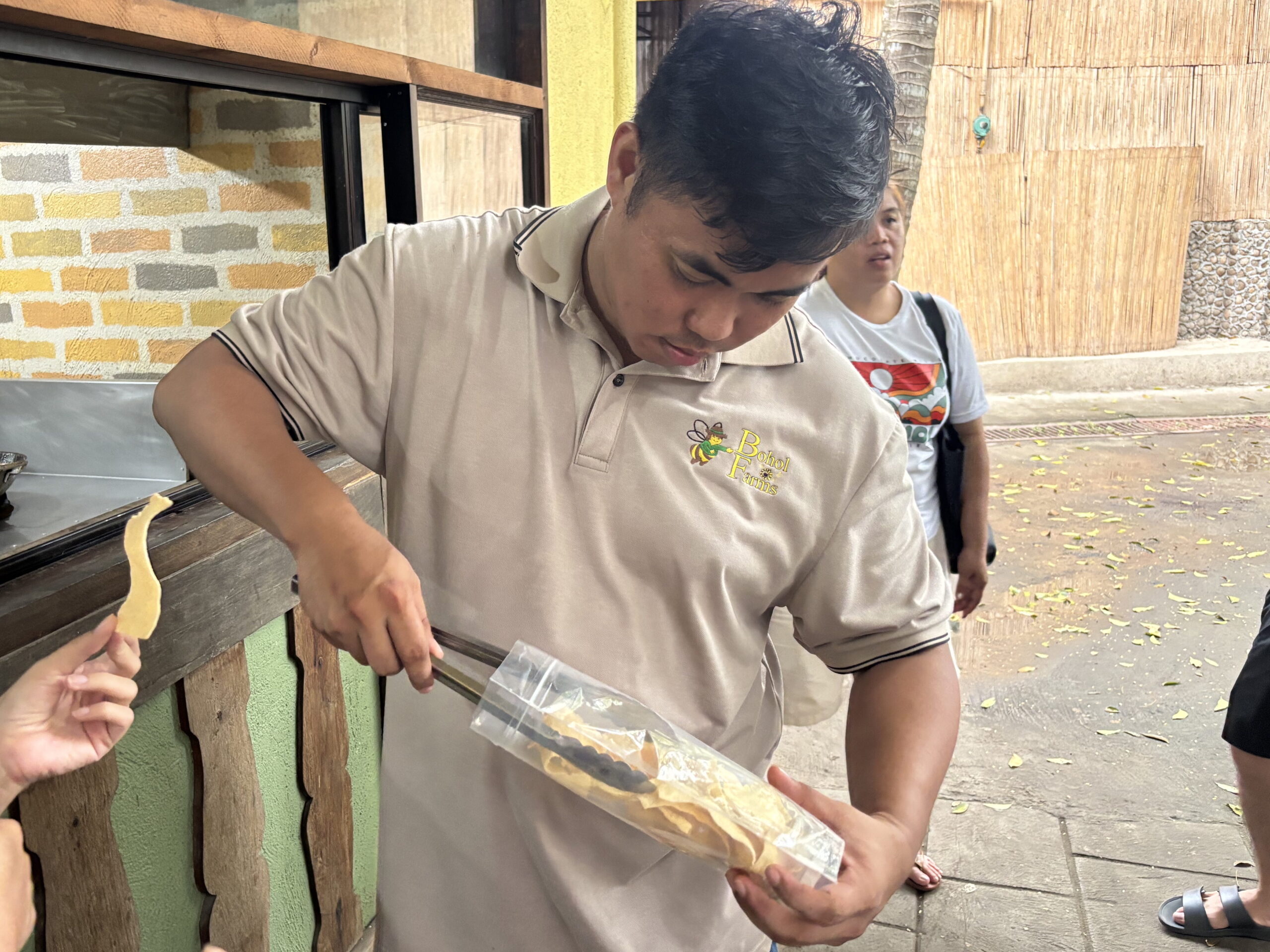
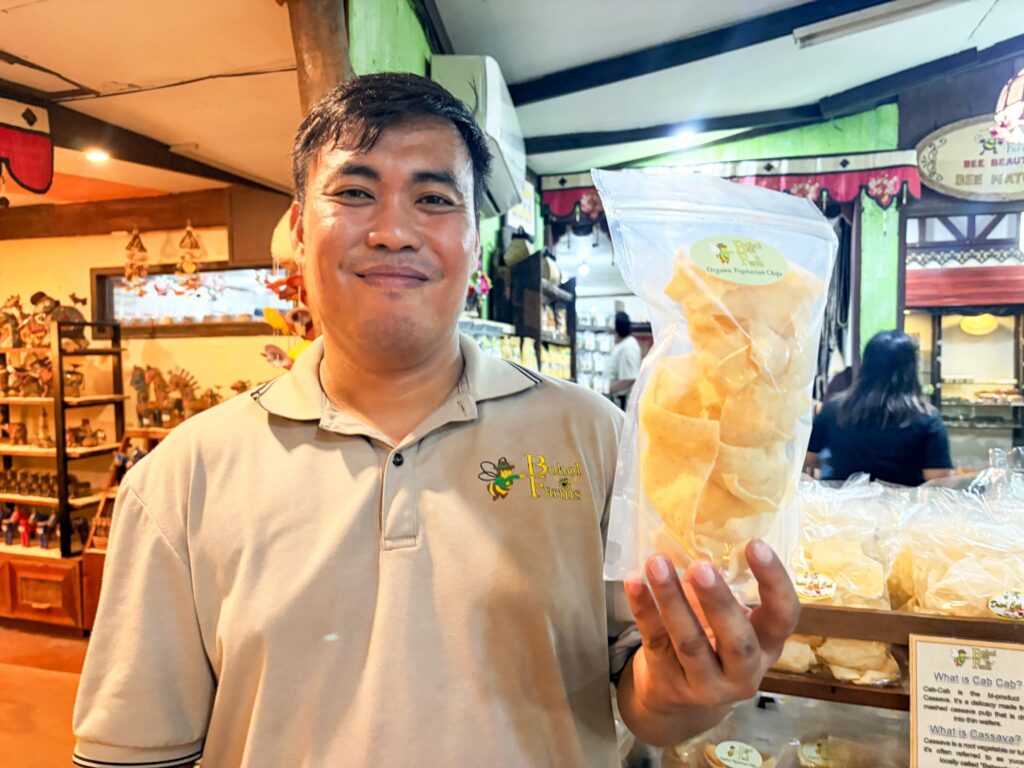
To complete the experience, we were served cassava ice cream cones. Even the cones were intentional, offering a gluten-free alternative while showcasing another local crop.
Traditional Rafia Weaving
The final stop was traditional rafia weaving, a quiet yet powerful reminder that sustainability is not only about food. It is also about preserving skills.
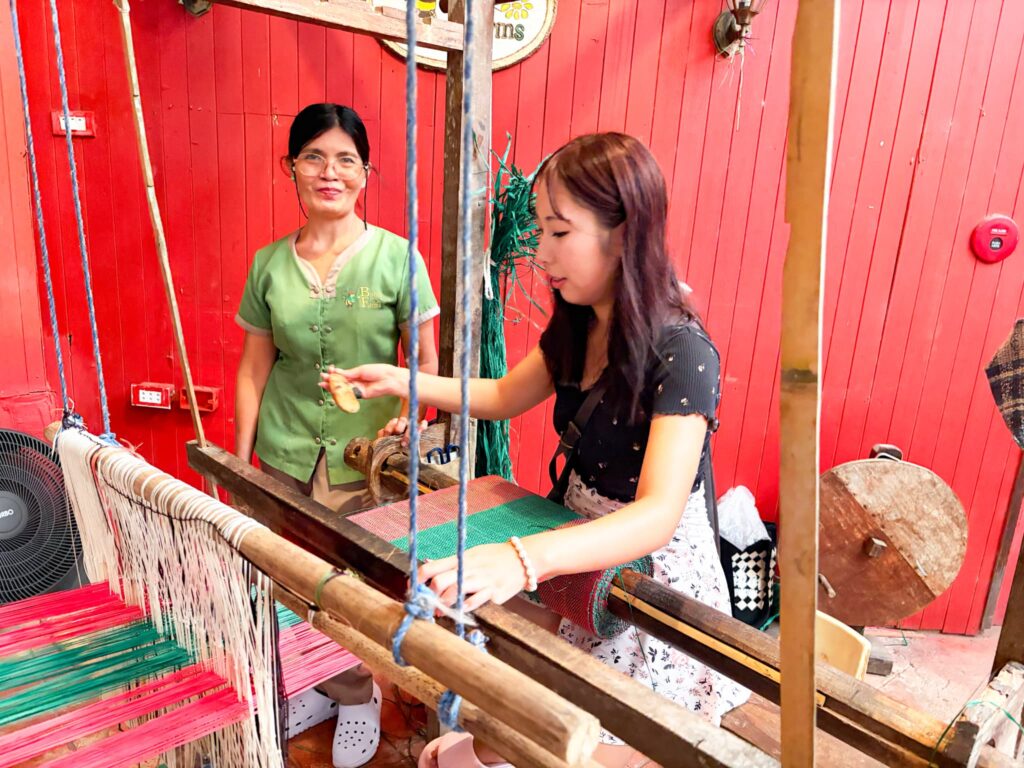
The weavers produce up to five meters a day, depending on design complexity. What impressed me most was that it takes about one hour just to set up the loom.
That preparation alone speaks volumes about patience, discipline, and respect for craft.
Watching the process made it clear that every woven piece carries time, muscle memory, and cultural continuity. Nothing is rushed and nothing is automated.
Bohol Bee Farm
Bohol Bee Farm is not a place you rush through. it is a space that asks you to slow down, listen, and recalibrate how you define value. From ice cream made with coconut milk to bread that refuses preservatives, from post-typhoon adaptation to weaving, everything operates with purpsoe.

✨おすすめ観光スポット✨